Get Out of the Building: Why a Week in Someone Else's Studio Can Do More Than a Year at Your Own Desk

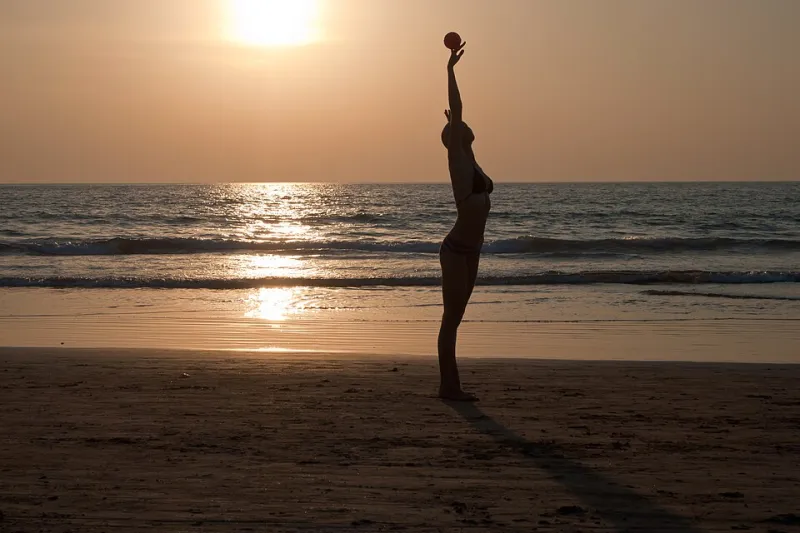
Photo by Photo by Barnabas Davoti on Unsplash on Unsplash
Every working artist I know has a version of this story. Months of grinding, work getting tighter and more competent and less interesting, nothing landing. Then they spend ten days somewhere else — a cabin, a converted schoolhouse, a stranger's guest room near a coast — and come back with the idea they'd been trying to force out of a chair at home.
That's not a coincidence, and it's not magic. It's just that ruts are environmental before they're psychological.
The Rut Is Usually Not a Discipline Problem
Here's the default diagnosis: I'm not working hard enough, so I need to work harder, in the same room, with the same view, at the same time of day. So you install a new app, buy a new notebook, restructure your mornings.
The reason none of that works is that you're not low on effort — you're low on new input. Your brain has already solved the problem space of that desk. Changing the room changes the constraint set: what's in front of you, what's on the walls, who you eat dinner with, how long the walk is. Most creative blocks aren't blocks. They're over-familiarity.
What a Change of Address Actually Does
It breaks the loop. At home, you have a groove, and the groove is also a rut. Away, you have no routine to fall back on, so the brain engages differently.
It removes the maintenance. Nobody's asking where the invoice is. Nobody needs a ride to practice. Time that would have gone into logistics goes into the work.
It forces you to talk shop with strangers. This is the underrated part. Residencies are functionally a professional network in a kitchen. You end up in a conversation with a composer, a furniture maker, and a documentary editor about the exact same problem, and someone says the one sentence that saves you six months.
It legitimizes the work. Sounds soft. Isn't. Being selected for something — even a small thing — recalibrates what you believe you're allowed to spend your life on.
Finding One That Won't Bankrupt You
The classic names still exist, and yes, some are still free: MacDowell in New Hampshire, Yaddo in Saratoga Springs, Ucross in Wyoming, Jentel, Ragdale outside Chicago, Vermont Studio Center in Johnson, Atlantic Center for the Arts in Florida, Headlands in Sausalito, Sitka Center on the Oregon coast, Anderson Ranch in Colorado, Art Omi in the Hudson Valley, Millay Arts in the old Austen Riggs buildings, Pioneer Works in Brooklyn.
But that list is not the market. It's the marquee.
Start with directories, not wish lists. Artist Communities Alliance maintains the most useful US residency database, and Res Artis covers international options. Filter by cost, duration, and whether you need a project already in progress or just a pulse.
Look at artist-run and DIY spaces. Churches, libraries, old motels, small-town arts councils, and repurposed storefronts run short programs that never make a national list. They often cost less than a month of your rent and nobody's panel of five is judging your statement.
Consider the park service. The National Park Service runs artist-in-residence programs across dozens of sites — you get housing in or near public land and a public component. Deadlines are scattered across the year, so check a handful of parks you'd actually want to live in.
Build your own. A house swap, a borrowed cabin, four nights in a cheap motel two hours from home, a friend's apartment while they're away. The residency industry sells the framework; the effect is mostly the address change. Put a rule around it — no social media, one project, a set number of days — and it starts doing the same job.
Paying for It Without a Trust Fund
- State arts councils. Nearly every state runs individual artist grants and residency stipends, and they're dramatically less competitive than national grants because almost nobody applies.
- Fiscal sponsorship. Organizations like Fractured Atlas let you raise tax-deductible money for a specific project, which makes crowdfunding much more attractive to donors.
- Fee waivers and fee-free programs. The push against application fees has grown into a real movement, and a lot of residencies now offer full or partial waivers — you have to ask, and the ask is one email.
- Stipends you didn't know were attached. Some places cover travel, materials, or childcare. Artist parents should always ask directly; programs have quietly expanded family support over the last few years.
- Apply to three, not thirty. A small number of genuinely good fits beats a shotgun blast of generic statements. And keep the statement specific to that place — panels can smell a template.
Making the Time Count
Front-load the arrival. Day one is for walking around and doing nothing. Your nervous system needs to catch up with your body.
Bring two projects, not one. One you're already deep in, and one you're scared of. The scary one is the reason you came.
Give yourself a public artifact. A reading, an open studio, a screening at the end. A deadline with witnesses turns ten days into ten productive days.
Eat with people. This is not optional and it is not wasted time. Half the value of a residency walks out of the dining room with you.
Write down the good ideas without acting on them. Capture, don't execute. The point is to leave with a direction, not a finished thing.
Coming Home Is the Hard Part
Don't land on a Monday and go straight back to email. Give yourself a buffer day, put the notes somewhere you'll actually see them, and change one thing in your home studio on purpose — the wall, the desk orientation, the time you start. Otherwise the old room reassembles itself in a week and takes the new ideas with it.
The work doesn't need you to be more disciplined. It needs you somewhere unfamiliar, with a key to a door that isn't yours.