Before the Story There Was Just the Mess: Rethinking Where Your Art Actually Began
Ask almost any working artist how they got their start and you'll get a version of the same story. There was a moment. A teacher who saw something. A performance that cracked them open. A song heard through a bedroom wall at age seven that rearranged their whole internal architecture. The details shift, but the structure is almost always the same: a before, a spark, an after.
It's a great story. It's almost certainly not the whole truth.
The Origin Story Is a Tool, Not a Document
Human beings are narrative animals. We don't just live our lives — we edit them, sequence them, make them mean something. Artists are especially good at this. It's literally part of the skill set. So when someone asks how you became who you are creatively, you reach for the version that holds together. The one that has shape.
But origin stories are constructed after the fact. They're assembled in retrospect, once you already know the ending — or at least the current chapter. The "moment you decided" to be an artist is almost always identified after you've already been acting like one for years. You don't name the turning point while you're turning. You name it later, when you need a beginning.
That's not dishonest. That's just how meaning-making works. The problem comes when we start mistaking the story for the reality — when we treat the myth as the map.
What Was Happening Before the Spark
Here's the part that almost never makes it into the interview: the years before the story started.
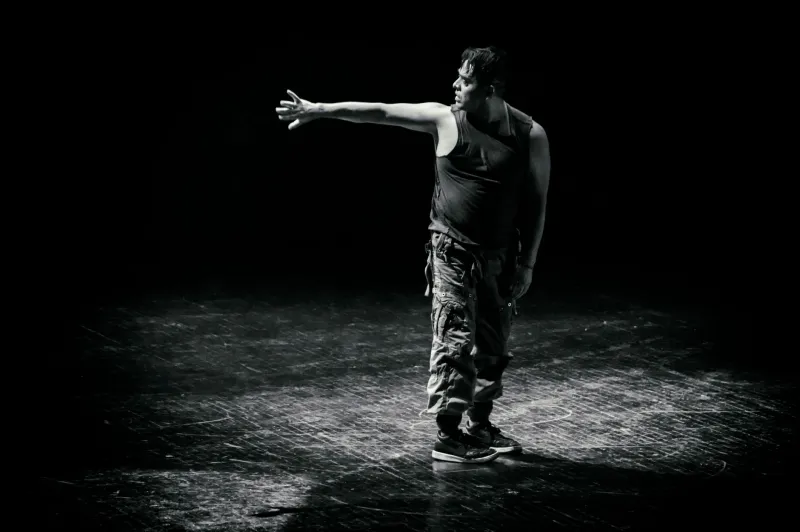
The kid who "decided" to be a dancer at fourteen had already spent a decade absorbing rhythm through church music, mimicking music video choreography in the bathroom mirror, and feeling inexplicably at home in any room where bodies moved together. The writer who says they "found their voice" after a college workshop had been filling journals since middle school, had read obsessively in ways their peers found weird, had been quietly building a relationship with language that no one — including them — had formally recognized as training.
Those invisible years aren't prologue. They are the origin. The spark just gave them a name.
This matters because when we erase the pre-story from our narrative, we do two harmful things. First, we undervalue the actual foundation of our craft — the slow accumulation of instinct, exposure, and unstructured practice that made us ready for the moment we point to. Second, we accidentally mislead the people coming up behind us, making it seem like creative life begins with a bolt of lightning rather than a long, quiet, unglamorous soaking.
The Cultural Appetite for Clean Beginnings
We're living in an era that is genuinely obsessed with origin content. The "how I started" video format is one of the most reliably engaging things a creator can post. Audiences devour behind-the-scenes footage, throwback comparisons, the scrappy early work held up next to the polished current version. There's something deeply satisfying about watching a trajectory snap into focus.
And that appetite isn't wrong — it's actually a form of hope. People looking for permission to begin their own creative lives want to see that someone else started somewhere recognizable. The origin story, when told well, is an act of generosity.
But the version that skips straight to the lightning bolt does a quiet disservice. It suggests that creative identity arrives fully formed, that you'll know it when it hits. And for the person who's already deep in the pre-story — already absorbing, already practicing in the margins, already building something they don't have words for yet — that version of events can make them feel like they're still waiting. Like they haven't started. Like they're behind.
They're not behind. They're in the part that doesn't get photographed.
Interrogating Your Own Mythology
So what actually happened before your story started? This isn't a rhetorical question. It's worth sitting with seriously.
What were you drawn to before you knew why? What did you do compulsively, without being told, without an audience, without a goal? Where did time disappear? What made you feel competent in a way you couldn't explain to anyone else?
For a lot of artists, this excavation is genuinely surprising. You find roots you forgot you had. You discover that the "influence" you picked up in your twenties was actually a rediscovery of something you'd already been circling since childhood. You realize that the aesthetic sensibility you think you developed consciously was actually assembled piece by piece over years of quiet, unsupervised attention.
That's not a small thing. That's your actual foundation. And naming it — even just privately — changes the way you hold your own work. You stop feeling like someone who got lucky with a spark and start recognizing yourself as someone who was building toward something for a long time. That shift in self-perception is not vanity. It's legitimacy. It's earned.
What This Means for How You Show Up for Others
If you're at a point in your creative life where emerging artists look to you — whether as a mentor, a teacher, a more established peer, or just someone whose work they follow — this reframe has real practical weight.
The most useful thing you can offer someone in the murky pre-story phase isn't a highlight reel of your origin moment. It's permission to be exactly where they are. It's the acknowledgment that the undefined years count. That not knowing what you're building yet doesn't mean you're not building.
When you talk about your beginnings, consider telling the longer version. The version that includes the weird obsessive phase, the years you didn't have language for what you were doing, the practice that happened without an audience or a plan. That version is harder to package, but it's also the version that actually helps someone.
Clean stories inspire. Honest ones orient.
The Myth Serves You Until It Limits You
None of this means you have to retire the polished origin story. It still does real work — in interviews, in artist statements, in the shorthand you use to introduce yourself to people who have five minutes and not fifty. The myth has a function.
But holding it loosely, knowing what it leaves out, keeping access to the fuller and messier version — that's what keeps you honest with yourself about what your craft actually cost and where it actually came from.
Urania Gazelli has always been interested in vision that doesn't ask for a permission slip. Part of that is recognizing that your creative legitimacy doesn't start at the moment you can point to in an interview. It starts way earlier, in the years that don't make the cut. In the mess before the story. In the origin before the origin.
Go back there sometime. There's more there than you remember.