The Quiet Room That Built the Loudest Room
There's a version of success that looks like it appeared overnight. The packed venue, the comment sections exploding, the think pieces about someone being "the next big thing." But spend five minutes talking to the artists behind those moments and you'll hear a different story — one that starts not with a spotlight, but with a small, almost invisible circle of people who were paying close attention long before anyone else showed up.
This is the part of the creative journey that rarely gets documented. It doesn't photograph well. There's no aesthetic to it. But it might be the most important work you do.
Depth Before Breadth: The Counterintuitive Math
We live in a culture that treats reach like it's the only metric that matters. Follower counts, stream numbers, ticket sales — all of it gets flattened into a single question: how many? And that obsession with scale has quietly convinced a generation of artists that growing wide is the same as growing strong.
It isn't.
A thousand passive followers who found you through an algorithm and forgot about you by Tuesday are not the same as fifty people who feel like they know you — who've read your newsletter at 11pm, who've been in a Discord server where you answered their questions directly, who got early access to something before the rest of the world did. Those fifty people don't just support your work. They advocate for it. They bring people. They show up physically, financially, emotionally in ways that the passive thousand simply won't.
Building depth before breadth isn't a consolation prize for artists who haven't "made it" yet. It's actually a strategy — one that some of the most sustainably successful independent artists in the US have been quietly running for years.
What Happens When You Let People Behind the Curtain
There's something almost chemically different about being let in early. Think about the last time an artist you follow sent you something that felt genuinely personal — a behind-the-scenes voice note, a rough demo before it was polished, a candid message about why a project almost didn't happen. That feeling of being trusted with something unfinished, something real — it creates a bond that no amount of perfectly produced content can manufacture.
Artists who understand this use tools like Patreon tiers, close-friends Instagram stories, private Discord servers, or even just a low-key email list to create a separate, more intimate layer of access. Not as a monetization hack, but as a genuine investment in relationship-building. They're saying: you matter enough to see this before it's ready.
And the people on the receiving end of that? They remember it. When the public moment eventually comes — the album drop, the gallery opening, the tour announcement — those are the people standing at the front of the line. Not because they were told to show up, but because they feel like they're part of the story.
The DM Economy Is Real
Here's something nobody talks about enough: direct messages are one of the most underrated tools in an independent artist's toolkit. Not the copy-paste "thanks for the follow" auto-reply kind. The actual, human, slightly-awkward-but-genuine kind.
Replying to someone who tagged you in something they made that was inspired by your work. Asking a question back to someone who left a thoughtful comment. Checking in on a fan who mentioned going through something hard. None of this scales. That's the whole point.
The artists who do this consistently — who treat their early audience like collaborators rather than consumers — tend to develop something you can't buy: a community that feels invested in them, not just their output. When those artists eventually do something big, the community mobilizes. They share, they buy, they tell their friends. Not because of a call to action, but because they genuinely want the person they've been quietly rooting for to win.
Small Rooms Are Where Trust Gets Built
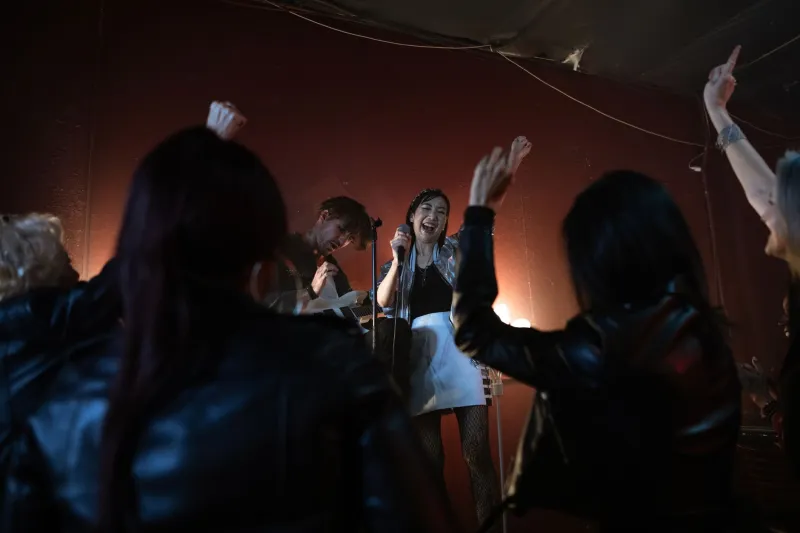
There's an old performance world truth that the best artists know: the small room is where you actually get good. The 30-person show at a bar in Nashville or a gallery opening in Bushwick where you can see every face — those are the shows that teach you something. You learn what lands, what doesn't, who you actually are when you're not performing for a crowd of strangers.
The same principle applies to your audience-building. The private community, the close-friends list, the intimate newsletter — these are your small rooms. They're where you figure out what your people actually respond to. They're where you get feedback that isn't filtered through the performance of public commenting. They're where you build the kind of trust that translates into real, durable support.
And when you eventually step into the bigger room? You carry all of that with you. You know your audience. You've already had the conversations. You're not starting from zero — you're arriving with a foundation.
The Long Game Looks Lonely Until It Doesn't
Let's be honest about something: building in private feels weird. It can feel like you're shouting into a void. When you're sending newsletters to 200 people while someone else seems to be blowing up on TikTok, the quiet work can feel like it isn't working.
But the artists who stick with it — who keep showing up for the small circle, who keep being real and consistent and generous with their attention — tend to look back and realize that the quiet room was never actually quiet. It was just intimate. And intimacy, in the long run, is louder than anything else.
The audience you build in private doesn't just show up when it counts. They bring people. They evangelize. They become the first chapter of a much bigger story.
So if you're in that quiet room right now — keep going. The noise comes later. The trust has to come first.