From Broke to Brand: How Today's Artists Rewrote the Rules of Making a Living
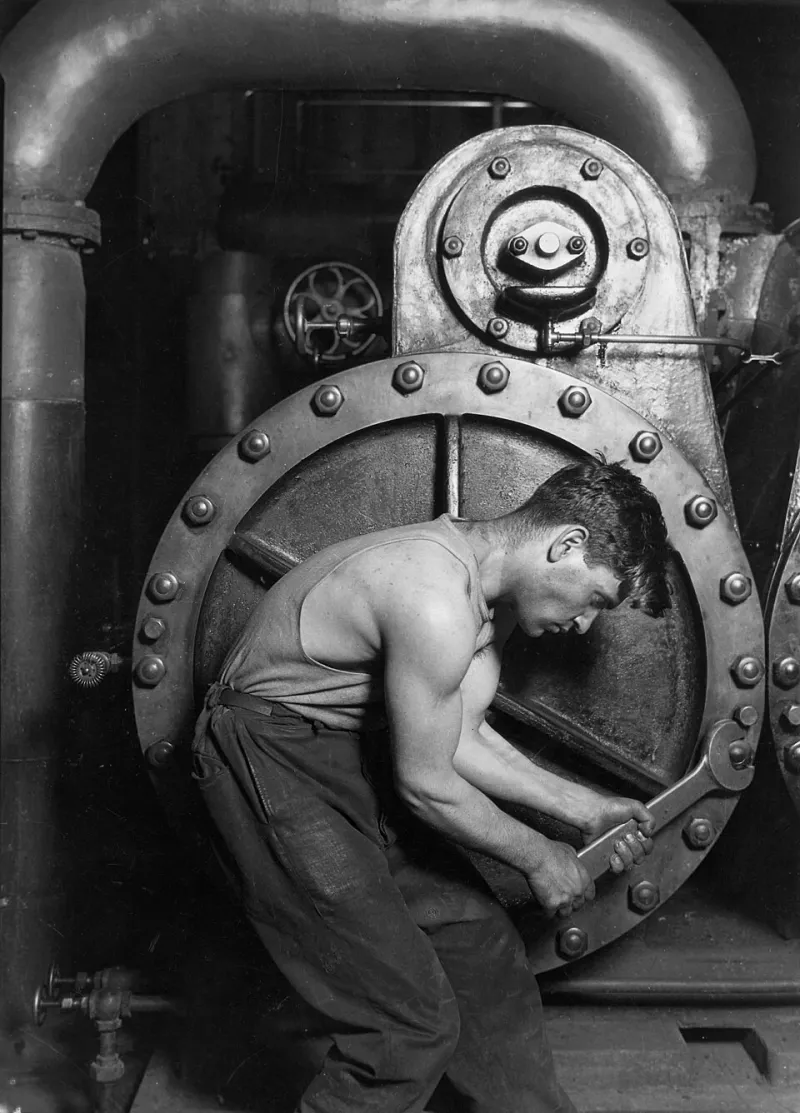
Photo: Lewis Hine, Public domain, via Wikimedia Commons
For decades, suffering was practically a prerequisite. You weren't a real artist unless you were eating ramen by candlelight, turning down day jobs on principle, and waiting for some gallery owner or record label to swoop in and validate your existence. The mythology was romantic, sure — but it was also quietly destructive, and a whole lot of people burned out chasing it.
That story is over. Or at least, it should be.
The economics of creative work have shifted so dramatically in the past ten years that the old framework doesn't just feel outdated — it feels almost fictional. Artists today aren't waiting to be discovered. They're building their own infrastructure, diversifying their income, and treating their practice like the legitimate business it always deserved to be.
The Old Narrative and Why It Stuck Around So Long
The starving artist myth didn't emerge from nowhere. For most of the 20th century, creative industries were genuinely gatekept. If you made visual art, you needed galleries. If you made music, you needed labels. If you wrote, you needed publishers. The people holding those keys had enormous power, and artists — especially those without family money or industry connections — were largely at their mercy.
Sacrifice became romanticized because it was often unavoidable. And once it got romanticized, it got weaponized. Suddenly, financial struggle wasn't just a circumstance — it was proof of authenticity. Comfort meant selling out. Stability meant you weren't serious.
That's a convenient story if you're the one profiting from underpaid creative labor. Less convenient if you're the one actually living it.
What Changed Everything
The internet didn't just give artists a platform. It gave them a direct line to their audience — and more importantly, a direct line to revenue that bypassed the traditional gatekeepers entirely.
Patreon launched in 2013 and quietly revolutionized what it meant to have fans. Instead of hoping a label or publisher would front the money for your next project, you could ask the people who already loved your work to fund it directly. Thousands of artists — illustrators, musicians, writers, podcasters — now make full-time livings through monthly supporter subscriptions. Some pull in six figures annually from audiences that, by mainstream standards, would be considered niche.
NFTs had their chaotic, controversial moment in the spotlight around 2021, and while the hype has settled, the underlying concept — digital ownership and direct artist-to-collector sales — permanently shifted how visual artists think about monetizing digital work. Photographers, illustrators, and digital painters who previously struggled to sell files now have frameworks for doing exactly that.
Licensing, once the domain of established names with agents, has become increasingly accessible through platforms like Musicbed, Artlist, and Society6. An independent artist's work can now end up in a Netflix production, a brand campaign, or a product line without a single handshake deal in a corporate boardroom.
And then there's merchandise, online courses, workshops, speaking engagements, brand partnerships, and commissioned work — all revenue streams that didn't exist or weren't accessible to independent creatives a generation ago.
The Hybrid Creator-Entrepreneur Is the New Normal
Here's the thing that makes some people uncomfortable: this shift requires artists to think like business owners. And for a long time, that felt like a betrayal of something sacred.
It isn't. It never was.
The most exciting creatives working today aren't choosing between art and commerce — they're integrating both in ways that actually serve their practice. A muralist who sells prints online funds the experimental work she actually cares about. A musician who licenses tracks to brands uses that income to self-produce albums without label interference. A visual artist who runs occasional workshops builds community and cash flow.
This hybrid model isn't a compromise. It's a strategy. And it's one that gives artists something the old mythology never did: staying power.
The Privilege Conversation We Can't Skip
None of this means the playing field is suddenly level. Access to these new revenue streams still requires time, tech literacy, a certain baseline of financial stability to get started, and — let's be honest — often a degree of social capital that not everyone walks in with.
Artists of color, working-class creatives, and those without industry networks still face compounding barriers that a Patreon account alone won't fix. Celebrating the new creative economy without acknowledging those gaps would be its own kind of mythology.
But the direction of change matters. More tools exist today than ever before, and the conversation around fair pay, artist contracts, and sustainable creative careers is louder and more mainstream than it's ever been. Organizations like the Artist Rights Alliance, advocacy around the Music Modernization Act, and grassroots communities across every discipline are actively pushing for structural change alongside individual hustle.
What This Means for How We Talk About Art
Maybe the biggest shift isn't economic — it's cultural. We're slowly, finally, starting to retire the idea that an artist's financial struggle is what makes their work meaningful. That the painting is more powerful because the painter couldn't afford heat. That the song hits harder because the musician was in debt when they wrote it.
Suffering was never the source of great art. Depth was. Experience was. Vision was. And those things don't require poverty as a prerequisite.
Today's most interesting artists aren't defined by what they sacrificed. They're defined by what they built — the bodies of work, the communities, the creative practices they sustained over time because they figured out how to keep going without burning everything down to prove they cared.
That's not selling out. That's growing up. And honestly? It looks a lot better on them.